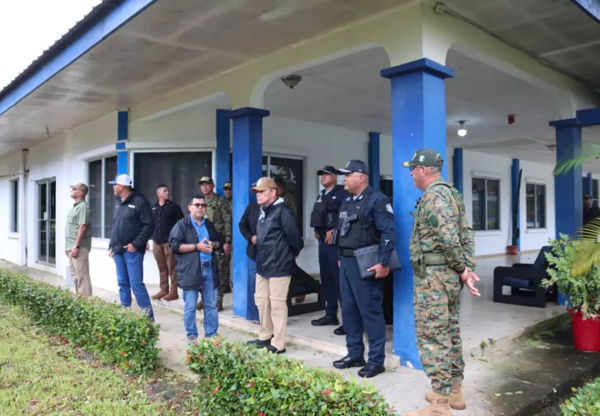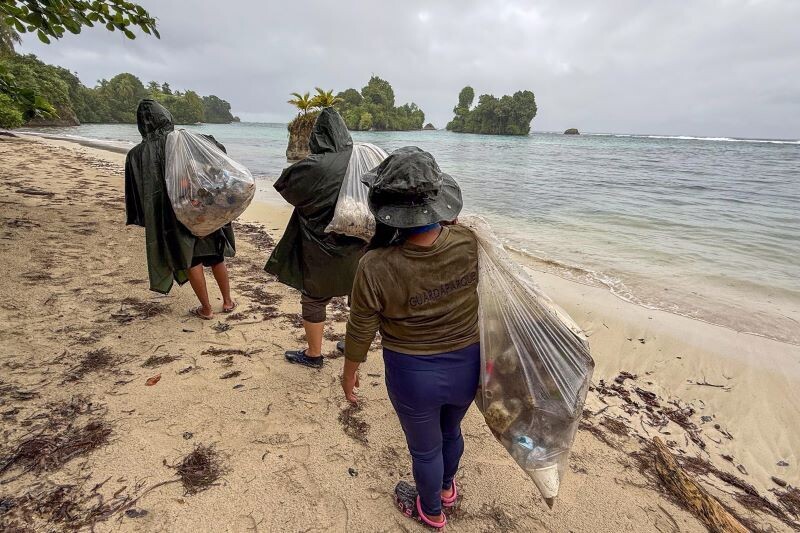
The Ministry of the Environment (MiAMBIENTE) has begun an inter-institutional cleanup and restoration operation in the Protected Landscape of Isla Escudo de Veraguas-Degó, affected by invasions and improper waste disposal. This operation aims to restore the reserve and protect its critically endangered species. The Minister of the Environment, Juan Carlos Navarro, who inspected the site, lamented the condition of the island, which was established as a protected area in 2009. This effort will be joined by the Panama Aquatic Resources Authority (ARAP), the Ministry of Social Development (MIDES), and the Panama Tourism Authority (ATP). These institutions will implement temporary support programs for the Bocas del Toro and indigenous communities in the area, which will include training in responsible fishing, community ecotourism, and ecological restoration. Additionally, the Panama Maritime Authority (AMP), the Naval Aviation Service (SENAN), and the Environmental, Rural, and Tourist Police, along with ARAP, will carry out surveillance and control operations to ensure compliance with the established measure. During the one-year closure period, the entity will focus on ecological restoration, adjustments to the management of the protected area, and a monitoring plan. Among the detected impacts are the illegal construction of homes, improper disposal of solid waste, and the illicit extraction of lobsters and cambombias, the latter being a species protected by CITES. The minister detailed that the decision to temporarily close the island for one year, through Resolution DM-0489-2025, was made after confirming that the site was "a disaster". Inspections revealed destructive practices such as catching octopus with chlorine, which kills coral and severely damages the marine ecosystem. It is also a crucial nesting point for sea turtles such as the leatherback (Dermochelys coriacea), green (Chelonia mydas), and hawksbill (Eretmochelys imbricata). MiAMBIENTE also referred to reports on the possible extraction of endemic fauna and flora, including the pygmy three-toed sloth. This complaint is under investigation, and if responsible parties are found, strict sanctions will be applied for violating Panamanian and international laws. The recovery of Isla Escudo de Veraguas will be carried out in an inter-institutional manner with the participation of MiAMBIENTE, the Aeronaval Service, and park rangers. It is the only home in the world to the pygmy three-toed sloth (Bradypus pygmaeus), the Escudo hummingbird (Amazilia handleyi), and the Zamia (Zamia hamannii).